AI Quick Summary
- Alignments adjust the angle of the wheels; balancing balances the uneven weight of the tire-wheel assembly.
- These are different services used to correct different issues.
- Pulling and uneven wear are indications of an alignment problem, while vibration is typically associated with balancing.
- Potholes, hitting curbs, and new tires are valid reasons for an inspection.
Introduction
If your steering wheel shakes on the highway or your car drifts toward the shoulder, your tires are telling you something. Wheel alignment and balancing keep a vehicle steady, comfortable, and easy on its tires. Between Orlando’s traffic, construction zones, and rough patches of road, these problems come up often.
What Is Wheel Alignment?
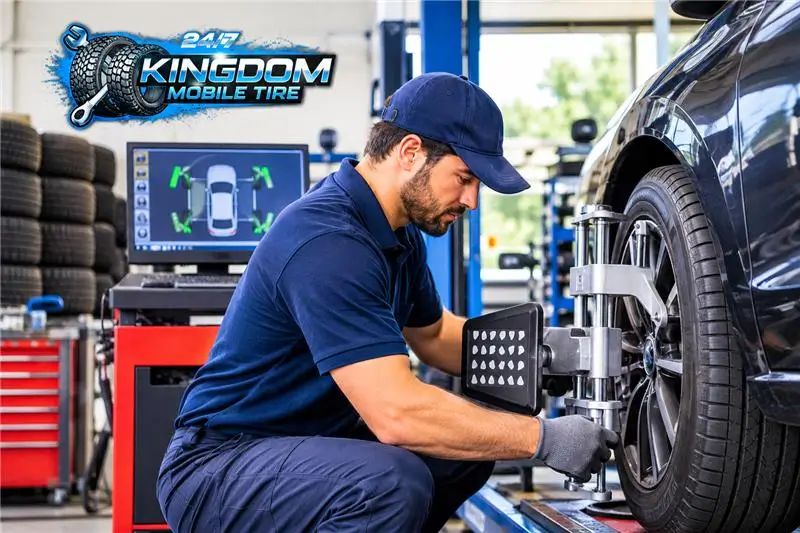
Wheel alignment is used to set the wheel angle according to the specifications of the manufacturer. There are three angles that should be considered:
- Camber: how far the wheel tilts inward or outward when viewed from the front.
- Caster: the angle of the steering axis, which affects stability and how the wheel returns to center.
- Toe: whether the fronts of the tires point slightly inward or outward.
When this alignment is lost, the vehicle tends to pull in either direction; the steering wheel will become misaligned, and tires tend to wear down improperly or too soon.
What Is Tire Balancing?
Tire balancing corrects uneven weight distribution around the tire and wheel assembly. Even a small heavy spot makes the wheel hop as it spins, which can cause steering wheel or seat vibration, often at certain speeds, plus uneven wear over time. Balancing is usually done during tire mounting and balancing when new tires go on, and after a tire repair.
Wheel Alignment vs. Tire Balancing: What’s the Difference?
Alignment adjusts the angle of the wheels. Balance equalizes the weight of the wheel and tire assembly. They are not substitutes for each other; balance will not correct wheel pull, and alignment will not stop a tire vibration. Some vehicles require either one or the other, while some require both.
Warning Signs Your Vehicle Needs Alignment or Balancing
- Pulling to the side when turning the wheels
- Uneven tire wear
- Vibration of the steering wheel at some speeds
- Steering wheel not aligned even while traveling straight
- Handling or ride quality that is different than normal
When Should You Get Wheel Alignment and Balancing?
- Post-tire replacement: wheel balancing is standard during installation. Tire alignment is not automatic but can be checked if symptoms are noticed.
- After a pothole or curb hit: impacts can knock angles out of spec.
- When tires wear unevenly.
- When steering feels off, or the vehicle vibrates.
- When a technician or the manufacturer recommends it.
Can Mobile Tire Repair Help With Alignment and Balancing?
The mobile tire technician will be able to check your tires, air pressure, detect problems such as misalignment or imbalance, and even fix your flat tire or install the spare tire. This way, you will be able to identify whether the issue is related to misalignment or balancing. For misalignment, special tools will be required, and the same goes for balancing. So you may have to go to the right tire shop for these services.
24/7 Kingdom Mobile Tire is a local mobile tire service provider in Orlando. It is perfect for those car owners in Orlando who want to get their tire problems fixed without having to limp to the shop with damaged tires. If you own a commercial vehicle and are in search of semi-truck tire roadside assistance, then make sure to ask them about their services.
Tips for Maintaining Your Tires
- Maintain the air pressure in tires.
- Check for unusual wear of treads.
- Take maintenance suggestions from the manufacturer.
- Try to avoid holes on the road.
Conclusion
Alignment keeps your tires safe; balancing keeps you comfortable while driving. Think of them separately and have them inspected. 24/7 Mobile Tires in Orlando for those who need 24-hour service is 24/7 Kingdom Mobile Tire, available at 321-365-1748.
Frequently Asked Questions
Q. Is wheel alignment the same as tire balancing?
A. Nope. Alignment is the adjustment of the wheel position, while balancing is the adjustment of the wheel-tire balance.
Q. Why does my steering wheel vibrate at highway speeds?
A. Usually an unbalanced tire, though worn parts or tire damage can also cause it, so get it inspected.
Q. Do new tires always need an alignment?
A. False. While new tires require balancing, you would only need to have alignment done when there are problems with your car’s direction.
Q. Can hitting a pothole affect my alignment?
A. Yes. A hard hit can knock wheel angles out of spec, so get it checked if the car pulls.
Q. Can a mobile tire service do wheel alignment?
A. Normally, no. For alignment, special tools are required, which are available only at the service center; therefore, verify that before scheduling an appointment.