
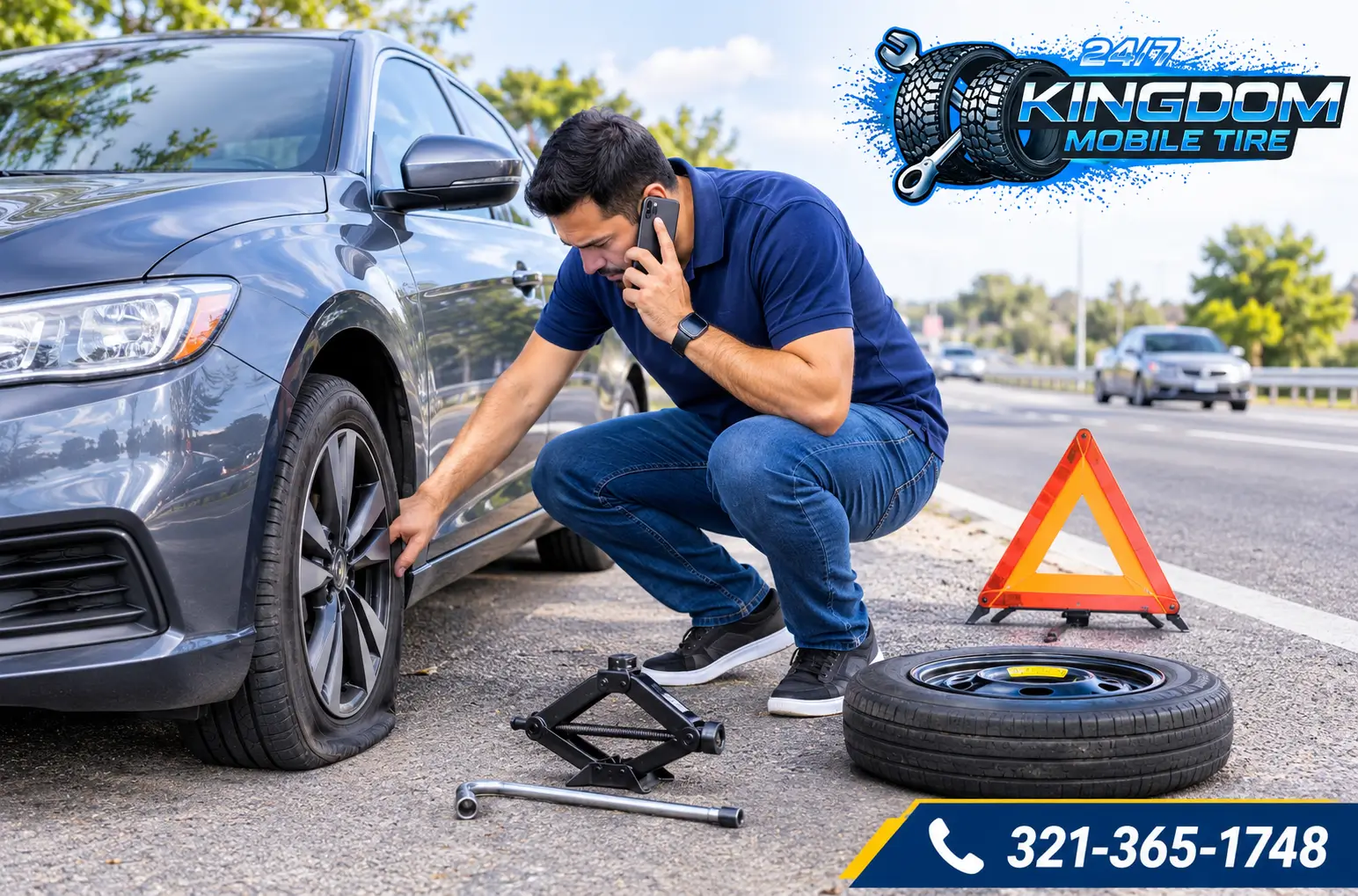
AI Summary:
If your tire goes flat while driving, follow these important steps:
- Stay calm and slow down without sudden braking.
- Turn on your hazard lights to warn other drivers.
- Move your vehicle to a safe location away from traffic.
- Check the tire for visible damage without putting yourself at risk.
- Avoid driving on a completely flat tire.
- Use a spare tire only if you can change it safely.
- Contact a mobile tire service if you need professional roadside assistance.
Introduction
A flat tire can happen anytime, whether you are driving to work, running errands or traveling with family. It can be stressful, especially if you do not know what to do next. However, your first actions can make a big difference. Knowing how to respond during the first 10 minutes can help protect you, your passengers, and your vehicle.
If you experience a flat tire repair in Orlando, understanding your options can also help you get back on the road without unnecessary delays or further tire damage.
What Should You Do in the First 10 Minutes After Getting a Flat Tire?
The first 10 minutes are important because your safety comes first. Follow these simple steps to manage the situation.
Minutes 1–2: Slow Down and Turn on Hazard Lights
If you notice your vehicle pulling to one side, unusual vibrations, or a loud noise, you may have a flat tire.
Keep both hands on the steering wheel and slowly release the accelerator. Avoid sudden braking or sharp turns because they can make the vehicle difficult to control.
Turn on your hazard lights so other drivers know you are experiencing a problem.
Minutes 3–4: Move Your Vehicle to a Safe Place
Look for a safe place to stop, such as a parking lot, wide shoulder, or nearby service area.
Avoid stopping on narrow roads, blind corners, or busy traffic lanes whenever possible. Once parked, apply the parking brake and switch off the engine.
If you are on a busy highway and cannot reach a safe location, remain aware of traffic conditions. Follow local emergency guidance and avoid standing beside moving vehicles.
Minutes 5–6: Check the Flat Tire
Once you are in a safe location, look at the damaged tire.
Check for visible nails, screws, cuts, or other damage. Do not remove objects stuck inside the tire because doing so may cause air to escape faster.
Also, check whether the tire is completely flat or slowly losing pressure. Never crawl under a vehicle or inspect it from a position exposed to traffic.
Minutes 7–8: Decide Whether You Can Change the Tire
If your vehicle has a spare tire, check whether it is in good condition and properly inflated.
Spare tire installation may be an option if you have the correct tools, understand the process, and are parked on stable, level ground away from traffic.
However, changing a tire on a busy roadside can be dangerous. If the location is unsafe or you are unsure how to do it, contact professional assistance instead.
Minutes 9–10: Call for Professional Tire Assistance
If you cannot safely replace or repair the tire, contact a professional provider.
Searching for 24/7 mobile tires near me can help you find roadside assistance when you need it. A 24/7 mobile tire service can bring tire-related assistance directly to your location, depending on service coverage and availability.
Share your exact location, vehicle type, tire size if known and the type of damage. This information helps the service provider understand what assistance you need.
Can You Drive With a Flat Tire?
No. Driving on a completely flat tire is unsafe and can cause additional damage.
The tire may become damaged internally, and continued driving can affect the wheel rim and vehicle handling.
Even a short distance can turn a repairable puncture into a tire replacement. If you notice a flat tire, stop in a safe place rather than trying to reach your destination.
Can a Flat Tire Be Repaired or Does It Need Replacement?
Not every flat tire needs to be replaced. Some punctures can be repaired after a professional inspection.
1. When Is Tire Repair Possible?
A tire may be repairable when:
- The puncture is in the central tread area.
- The hole is small enough to meet repair standards.
- The tire has no serious internal damage.
- The sidewall and shoulder areas are undamaged.
A professional technician should remove the tire from the wheel and inspect its internal condition before deciding whether repair is safe.
2. When Should You Replace a Tire?
Replacement is usually necessary when the tire has sidewall damage, a large cut, a bulge, or serious internal damage.
A tire puncture repair kit or tire hole repair kit may appear convenient. Still, these products are not suitable for every type of damage. They should never replace a proper inspection.
When Should You Choose Mobile Tire Replacement?
Mobile tire replacement is helpful when your existing tire cannot be repaired safely or when you do not have a suitable spare.
A mobile tire installation service can bring the necessary equipment and replacement tire to your location, subject to availability.
Professional services may also include tire mounting and balancing. Proper balancing helps reduce vibration and supports smoother driving.
For drivers who need flat tire repair in Orlando, roadside tire replacement can be a convenient option when visiting a traditional tire shop is difficult.
Where Can You Get Emergency Mobile Tire Assistance in Orlando?
When a flat tire interrupts your day, getting reliable assistance matters.
24/7 Kingdom Mobile Tire provides mobile tire assistance in Orlando and surrounding communities. Its services include mobile tire repair, replacement, installation, and roadside tire assistance.
Whether you need help with a damaged tire or require a replacement, contacting a mobile tire provider can help you understand the available options without driving on an unsafe tire.
Contact for assistance:
- Phone: 321-365-1748
- Email: 247kingdommobiletire@gmail.com
Call and explain your location and tire problem to discuss the available service.
Frequently Asked Questions –
Q. What is the first thing to do when you get a flat tire?
A. Slow down gradually, turn on your hazard lights, and move to a safe stopping location. Avoid sudden braking or steering.
Q. How long can you drive on a flat tire?
A. You should not drive on a completely flat tire. Continuing to drive can damage the tire, wheel rim, and vehicle.
Q. Can a tire with a nail in it be repaired?
A. Sometimes. A small puncture in the repairable tread area may be fixed after professional inspection. Sidewall punctures generally require replacement.
Q. Is mobile tire replacement available at night?
A. Some providers offer 24/7 mobile tire service. Contact the provider directly to confirm availability, location coverage, and estimated arrival time.
Q. Is a tire repair kit a permanent solution?
A. No. A tire repair kit is generally a temporary measure in limited situations. A professional inspection is necessary to determine whether the tire can be safely repaired or needs replacement.