
AI Quick Summary
- Car shaking while driving may be caused by incorrect wheel alignment, unbalanced tires, damaged rims, uneven tire wear, or suspension problems.
- A professional wheel alignment check can identify incorrect wheel angles that may affect steering, handling, and tire wear.
- Wheel alignment and tire balancing are different services. Alignment corrects wheel angles, while balancing helps the tire and wheel rotate smoothly.
- Mobile tire repair and mobile tire replacement can help with flat, punctured, or damaged tires, but complete alignment may require specialized equipment.
- Drivers should arrange a professional inspection if they notice pulling, uneven tire wear, steering vibration, or shaking after hitting a pothole or curb.
A shaky steering wheel may pose discomfort to the driver and even be a cause for alarm, especially when driving on a paved surface. In some instances, the shake is due to tire problems, whereas in others, the source of the trouble may lie in wheel, brake, suspension, or steering issues. This information will come in handy in determining when to seek professional opinion.
Why Does Your Car Shake While Driving?
Vehicle vibration can happen for several reasons. The most common causes include:
- Incorrect wheel alignment
- Uneven tire wear
- Unbalanced tires or wheels
- Bent rims after hitting a pothole
- Damaged or underinflated tires
- Worn suspension or steering parts
- Brake problems
The speed and driving situation can provide useful clues. Shaking at a specific speed may relate to tire balance or tire mounting and balancing issues. Vibration during braking may indicate a brake problem, while shaking during acceleration could involve the drivetrain, engine mounts, or other mechanical components.
Because several problems can create similar symptoms, it is important not to assume that alignment is always the cause.
How Can Wheel Alignment Cause Vehicle Shaking?
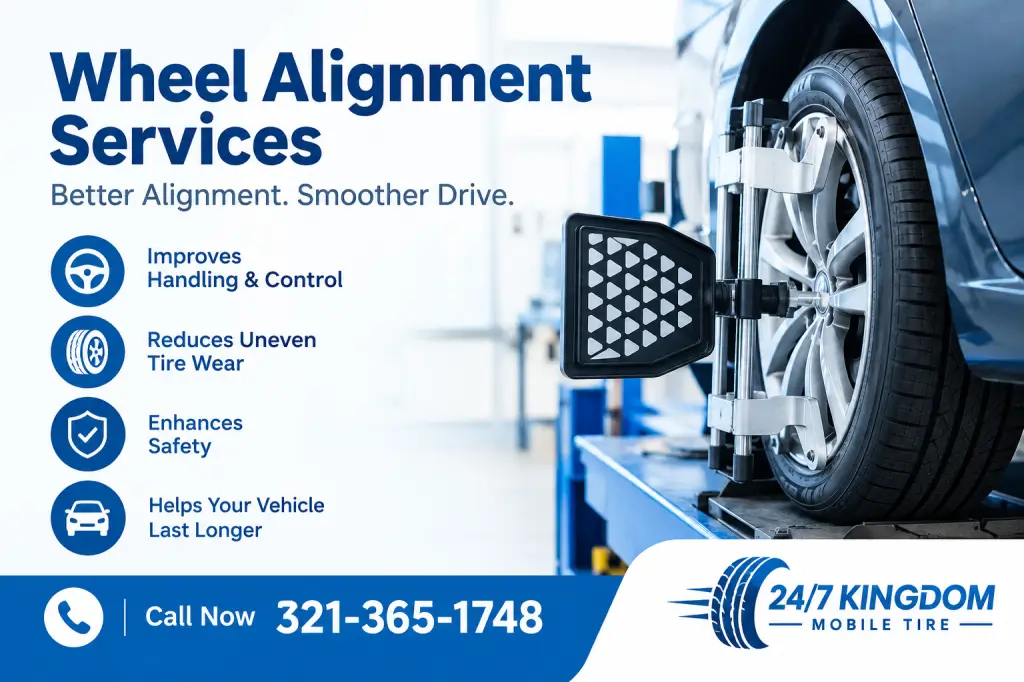
Wheel alignment refers to the adjustment of the angles of the wheels so they remain positioned correctly in relation to the road and the vehicle. The main alignment angles include camber, caster, and toe.
If this is not done, the wheels will not be able to make proper contact with the ground. It causes higher friction, improper wear and tear, poor handling, and pulling. In some cases, it can also lead to vibration of the steering.
A professional wheel alignment check can help identify whether the wheels are positioned outside the manufacturer’s recommended specifications. It may also reveal signs of impact damage or worn steering components that need further attention.
Warning signs about alignment issues include a crooked steering wheel, the vehicle veering to the side, and the vehicle drifting when the road looks straight ahead. It is wise to have these checked before they become more serious problems with the tires.
Wheel Alignment vs. Tire Balance
Wheel alignment and tire balance are different services, although both can affect driving comfort and safety.
| Service | What It Corrects | Common Warning Signs |
|---|---|---|
| Wheel alignment | Incorrect wheel angles | Pulling, uneven wear, crooked steering wheel |
| Tire balance | Uneven weight distribution in the tire and wheel assembly | Vibration at certain speeds |
| Tire balancing | The process of correcting wheel and tire weight differences | Steering wheel or seat vibration |
| Balancing of wheel | Weight adjustment to help the wheel rotate smoothly | Repeated shaking after tire installation |
A vehicle may need both alignment and balancing. For example, a pothole can affect wheel alignment while also damaging a tire or rim. A technician should inspect the complete tire and wheel assembly instead of focusing on only one possible cause.
When Should You Schedule Wheel Alignment Services?
You should consider professional wheel alignment services when you notice:
- Your car pulls left or right
- The steering wheel is not centered
- Tires are wearing unevenly
- The vehicle drifts while driving
- Steering feels less responsive
- You recently hit a pothole or curb
- Suspension parts were replaced
- New tires were installed and handling feels unusual
A tire alignment service may be especially useful after a strong road impact or suspension repair. Correct alignment helps the tires maintain better contact with the road and may reduce unnecessary wear. However, alignment cannot repair a damaged tire, bent rim, or worn suspension part.
Can Mobile Tire Services Help?
Mobile tire repair can help with certain roadside problems, including punctures, flat tires, damaged tires, and emergency tire inspections. A mobile technician may check tire pressure, inspect visible damage, and determine whether a tire can be repaired or needs replacement.
Mobile tire replacement come in handy when the tire cannot be driven on safely or in cases where the spare tire is not able to continue being used. However, tire alignments require special tools and a leveled surface for carrying out the alignment process. All mobile firms do not offer full alignment services.
How to Prevent Alignment and Tire Problems
Simple maintenance can help reduce the chance of repeated vibration and uneven wear:
- Check tire pressure regularly
- Follow the vehicle manufacturer’s tire rotation schedule
- Avoid potholes and curbs whenever possible
- Inspect the tread for uneven wear
- Check the tires after a major road impact
- Use the correct tire size and pressure
- Arrange an inspection if vibration continues
Never ignore strong or sudden shaking. If the vehicle becomes difficult to control, pull over safely and arrange professional assistance.
Conclusion
Vehicle shakes may be caused by misalignment of tires, wheel balance, wheel damage, brake problems, or suspension issues. An inspection by an expert will reveal what the underlying problem is and will stop more damage to occur. If you notice your car behaving abnormally when driving, book an inspection with a trusted tire expert.
For roadside tire assistance, 24/7 Kingdom Mobile Tire provides mobile tire support in Orlando. Call 3213651748 for help with tire-related emergencies.
Frequently Asked Questions
Q. Can bad wheel alignment make a car shake?
A. Incorrect alignment may be responsible for causing vibrations, pulling, uneven tire wear, and handling issues. However, vibrations may also be caused by tire imbalance, bent rims, brakes, and worn suspension.
Q. What is the difference between wheel alignment and tire balancing?
A. Alignment adjusts the wheel angles to match manufacturer specifications. Tire balancing corrects uneven weight distribution in the tire and wheel assembly. A vehicle may require both services for smooth and stable driving.
Q. How often should I get a wheel alignment check?
A. There isn’t one schedule that can be applied to all vehicles. Set up your inspection after you’ve hit a pothole, noticed any uneven tire wear, replaced suspension components, or had your car pulling/drifting/steering issues.
Q. How Long Does a Wheel Alignment Take?
A. A standard wheel alignment usually takes 45–60 minutes for most cars and SUVs, depending on the vehicle and required adjustments.
Q. How Much Does an Alignment Cost?
A. On average, a standard four-wheel alignment costs $100–$200, while a front-end or two-wheel alignment usually costs $50–$100.