
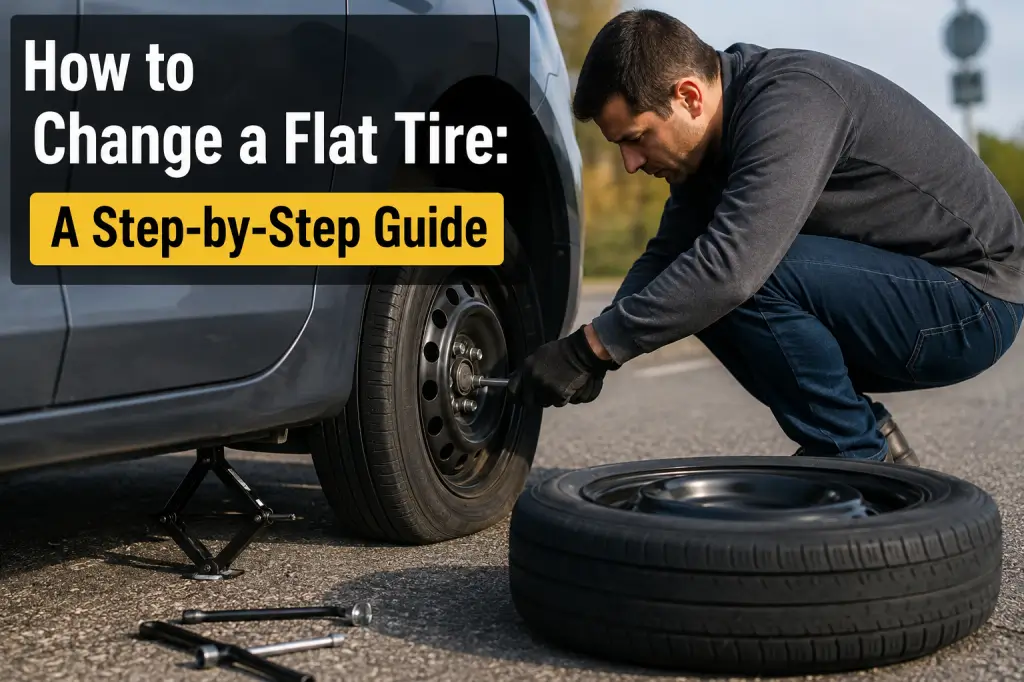
Fast Facts:
- Park on flat ground away from traffic.
- Use hazard lights, the parking brake, and wheel wedges.
- Loosen lug nuts before raising the vehicle.
- Fit the spare and tighten the nuts in a star pattern.
- Call a professional when the location is unsafe.
Why Should You Know How to Change a Flat Tire?
A flat tire can happen without warning, but knowing what to do can keep you calm and safe. Changing a tire is not difficult when you have the right tools and follow each step carefully. This guide explains how to stop safely, remove the damaged tire, fit the spare, and check everything before driving again.
It also explains when roadside conditions make a do-it-yourself tire change unsafe and when seeking flat tire repair in Orlando is the safer option. Whether you are a new driver, student, business owner, or daily commuter, these simple instructions will help you handle a common road problem with confidence and avoid causing extra damage to your vehicle.
What Tools Do You Need?
Keep these items in your vehicle:
- A properly inflated spare tire
- A vehicle jack and lug wrench
- Wheel wedges
- Work gloves and a flashlight
- Your vehicle owner’s manual
A tire-pressure gauge and portable air compressor are also useful. Check the spare regularly because it can slowly lose air while stored.
What Should You Do First?
Slow down gently and move to a wide, level area away from traffic. Avoid slopes, soft ground, blind turns and narrow road shoulders.
Turn on your hazard lights, switch off the engine and apply the parking brake. Ask passengers to wait away from the road.
When the location is unsafe, call an emergency tire repair service in Orlando drivers can reach instead of attempting the job beside moving traffic.
How Do You Change a Flat Tire?
1. How Do You Secure the Vehicle?
Place wheel wedges around the tire opposite the flat one.
For a rear flat tire, secure one of the front wheels. For a front flat tire, secure one of the rear wheels. This helps stop the vehicle from moving while it is raised.
2. When Should You Loosen the Lug Nuts?
Remove the hubcap if needed. Place the lug wrench over each lug nut and turn it counter-clockwise.
Loosen every nut slightly, but do not remove them completely. The vehicle should remain on the ground during this step because the tire may spin after it is raised.
3. Where Should You Place the Jack?
Check the owner’s manual to find the approved jacking point near the damaged tire. Never place the jack beneath plastic trim or an unsupported part of the vehicle.
Raise the vehicle until the flat tire is about six inches above the ground. Never put your hands, feet, or body beneath a vehicle supported only by a jack.
4. How Do You Remove the Flat Tire?
Remove the loosened lug nuts and keep them together in a safe place.
Grip the tire by its tread and pull it straight towards you. Lay the damaged tire flat on the ground so it cannot roll into traffic.
5. How Do You Install the Spare Tire?
Align the spare tire with the wheel bolts and push it into position. Replace the lug nuts and tighten them by hand.
Lower the vehicle until the spare touches the ground. Tighten the nuts firmly in a crossing or star pattern. This helps the wheel sit evenly.
Lower the vehicle fully and check every nut again. Correct spare tire installation reduces the risk of the wheel becoming loose while driving.
How Long Does a Tire Change Take?
Many drivers ask, “How long does a tire change take?”
It normally takes around 15 to 30 minutes when the tools are ready and the location is safe. Tight lug nuts, poor lighting, bad weather, or limited experience can make the process longer.
Never rush. Correct jack placement and properly tightened lug nuts are more important than completing the job quickly.
Can You Drive Normally on a Spare Tire?
Most compact spare tires are made for temporary use only. Follow the speed and distance limits printed on the tire or listed in the owner’s manual.
Check the spare tire pressure before driving. Arrange a proper tire repair or replacement as soon as possible.
Stop driving if the vehicle shakes, pulls to one side, or makes unusual sounds.
When Should You Call a Mobile Tire Professional?
Call for professional help when you are beside fast traffic, on unstable ground, in severe weather, or without the correct equipment.
You should also request help when:
- There is no usable spare tire.
- The lug nuts will not move.
- The wheel appears damaged.
- The tire has serious sidewall damage.
- You do not feel confident using the jack.
A mobile tire repair in Orlando provider may inspect the damage, repair a suitable puncture, replace the tire, or fit your spare. A mobile tire installation service is useful when you need assistance at your location without arranging a tow.
For flat tire repair in Orlando, contact 24/7 Kingdom Mobile Tire. Its 24/7 mobile tire support in Orlando can help when changing the tire yourself is difficult or unsafe.
How Can You Request Roadside Tire Help?
Contact 24/7 Kingdom Mobile Tire for roadside assistance:
- Phone: 321-365-1748
- Email: 247kingdommobiletire@gmail.com
Share your exact location, vehicle type, tire size if known, and a short description of the problem. These details can help the technician bring the correct equipment.
Frequently Asked Questions –
Q. Can I Change a Tire Without Wheel Wedges?
A. Wheel wedges are strongly recommended because they help prevent the vehicle from moving while it is raised.
Q. Can Every Punctured Tire Be Repaired?
A. No. Small tread punctures may be repairable, but sidewall damage, large holes, and serious blowouts normally require replacement.
Q. Should I Tighten the Lug Nuts While the Car Is Raised?
A. Tighten them by hand first. Tighten them firmly after the tire touches the ground.
Q. What Should I Do if the Spare Tire Has Low Pressure?
A. Inflate it before driving whenever possible. An underinflated spare may handle poorly and could become damaged.
Q. Who Can Help With a Roadside Flat Tire?
A. 24/7 Kingdom Mobile Tire provides roadside inspection, tire repair, replacement, and spare tire installation services in the Orlando area.